


Although freshwater pearls are the most commonly produced pearls, their unique shapes and wide range of colors combined with their attractive prices and charming character, have made them a favorite among jewelry designers, shoppers and pearl connoisseurs alike. While they characteristically range in shape from very baroque to near-round, the fine freshwater pearls we offer at Pearl Paradise are the roundest grown today – nearly indistinguishable from akoya in their shape. Our trademark Freshadama line of freshwater pearl jewelry is guaranteed to be the best in the world.
How do they compare to other types of pearls?
Best known for their whimsical shapes and wide variety of sizes and colors, the character of a freshwater pearl is found in its distinctive surface texture and the warmth of its luster. The nacre of a high-quality freshwater pearl does not typically have the glossy, metallic finish found in akoya pearls, and they are evaluated on separate quality scales.
One interesting piece of freshwater pearl trivia: a single freshwater pearl mussel is capable of producing up to 50 pearls at a time (although current production limits each shell to 24-32 pearls).

The more you know...
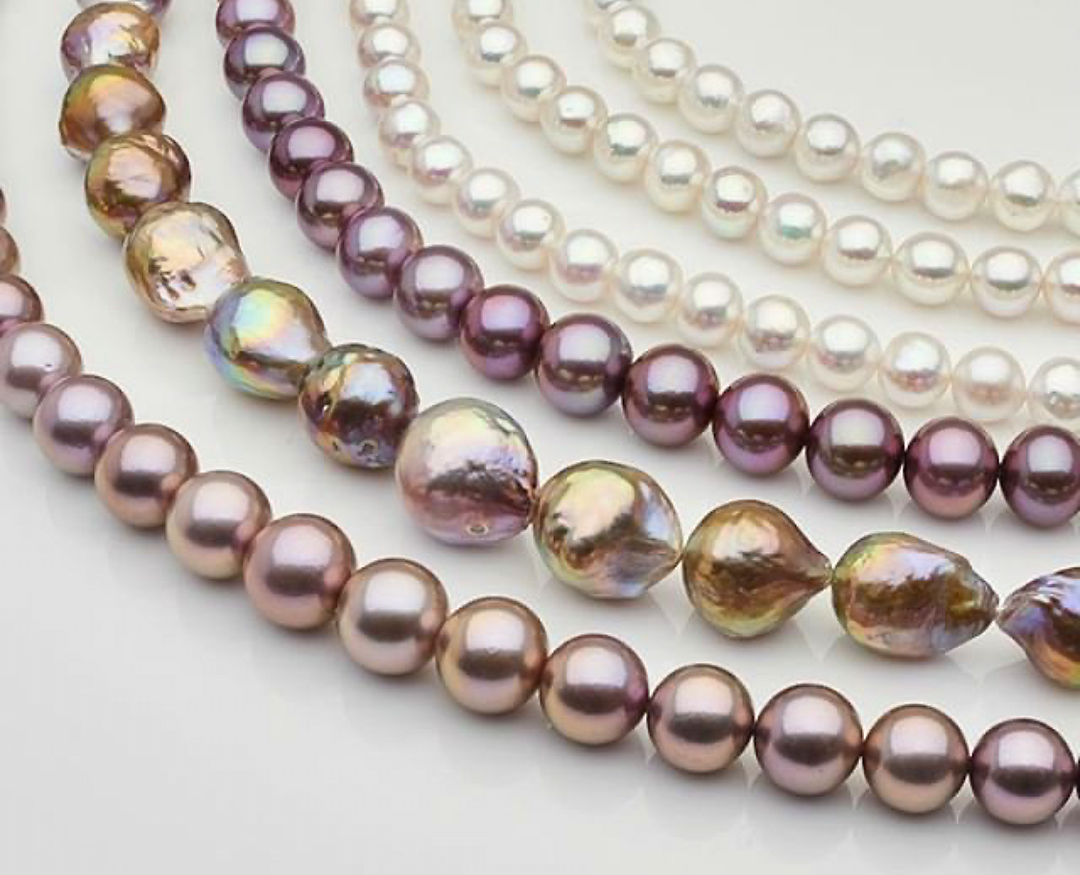
What colors, shapes, and sizes are available?
Because they offer a wider diversity of colors, shapes, and sizes than any other type of pearl, freshwater pearls are often used in fanciful designer jewelry. In addition to the traditional white body color, these pearls come in a rainbow of natural pastel colors such as lavender, pink, and every shade in between. Most freshwater pearl information notes their varied shapes, including potato-shaped and stick pearls, rice-shaped and button pearls, coin-shaped and drop pearls, off-round and round pearls.
While a perfectly round freshwater pearl is extremely rare, Pearl Paradise deals with the roundest, highest quality freshwater pearls available. Their sizes range from tiny seed pearls measuring 1 or 2 mm in diameter to 15 mm and larger.
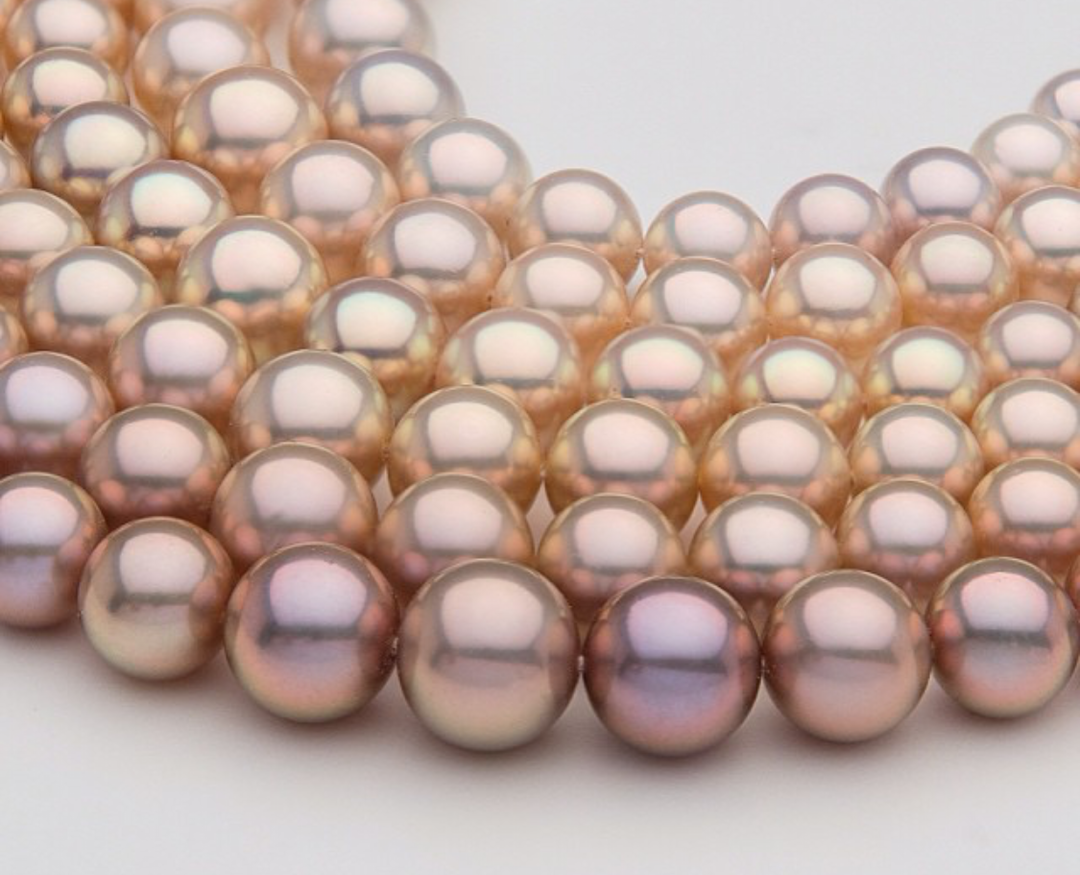
How rare and valuable are they?
While freshwater pearls as a variety are the most common type of pearl, very round and lustrous freshwater pearls are very difficult to find. Top-of-the-line freshwater pearls, such as the ones you'd find at high-end jewelry stores and reputable online stores such as PearlParadise.com, command a high retail value. They are dazzling in their rich, bright luster, and their unique charm will last you a lifetime.
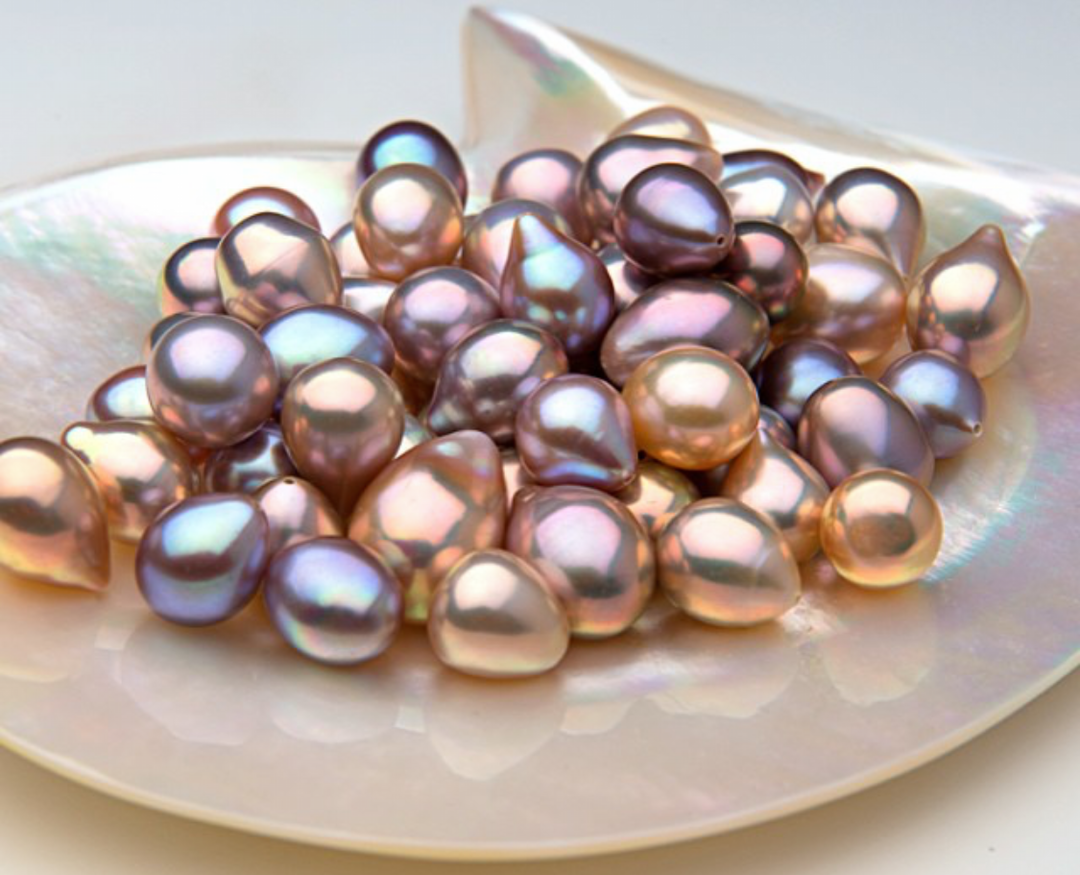
Where do they come from?
Freshwater pearls are produced by Hyriopsis cumingi (triangle shell) and Hyriopsis schlegeli (Biwa shell) commercially in China, and other bivalve mussels that live in lakes, riverbeds and creek bottoms in Japan (Biwa pearls and Lake Kasumigaura pearls), as well the United States (Mississippi River Basin). Although most freshwater pearl information lists several areas of the world as home to pearl-producing mussels, the global freshwater market is overwhelmingly dominated by Chinese pearl farms, which account for nearly all freshwater pearls sold today.
At freshwater pearl farms, each mussel is surgically implanted with 24 to 32 tiny pieces of mantle tissue, a process known as nucleation. Once the tissue has been inserted, a sac forms and cells begin secreting nacre (pronounced NAY-ker), forming a calcium-carbonate compound - a pearl. Over the course of 2 to 7 years, the mussels deposit layer upon layer of nacre around the growing gems, generally producing more than two dozen pearls clustered on the inside of each shell.
After harvest, millions of pearls are sorted carefully and matched for size, shape, color, and quality. Once the sorting is complete, loose pearls are available for sale individually and strands of matched pearls are sold on temporary strings known as "hanks."


